
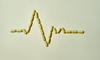





Your nervous system doesn't stay in your body — it walks into the room with you. Here's what HRV reveals about your leadership, why your state is contagious and measurable, and how to manage it: build the habits first, let the data confirm them.
Key Takeaways
- A leader's nervous-system state is contagious. Ongoing sympathetic activation shows up in tone and pacing, and the team absorbs it before a word is said.
- HRV is the clearest window into that state — more variability generally means more parasympathetic influence and more capacity in reserve.
- A single morning score is a snapshot, not a verdict. A late meal, a bad night, or one stressful call moves the number.
- Treat recovery like a thermostat, not a thermometer. Sleep, breathing, time outdoors, and real conversation are foundational and can hold the setpoint regardless of today's reading.
- Build the habits first, let the data confirm them — the same lesson that held for elite athletes for thirty years.
A leader who is running hot brings that state into every meeting on the calendar. The team feels it before anyone says a word. This is not metaphor. It is autonomic biology, and it is measurable.
What is HRV, and what does it reveal about your state?
HRV is the tiny variation in time between each heartbeat, and it's the clearest available window into whether your nervous system is in a stress-dominant or recovery-dominant mode. Your autonomic nervous system, the network of nerves that runs your heart rate, digestion, and stress response without conscious control, operates in two primary modes.
Sympathetic branch: drives the fight-or-flight response — the state that sharpens focus and readies the body for exertion.
Parasympathetic branch: drives rest-and-digest — the state where recovery, digestion, and long-term repair take place.
Heart rate variability (HRV): the measurement of the tiny variation in time between each heartbeat, used as a window into which autonomic mode is dominant.
A more variable rhythm generally reflects greater parasympathetic influence and more capacity in reserve. A more rigid, uniform rhythm generally reflects sympathetic dominance and less capacity in reserve. Thayer and colleagues (2012), in a meta-analysis spanning dozens of neuroimaging studies, connected this variability to the brain regions responsible for emotional regulation, a finding that has replicated across a substantial body of subsequent research.
Why does a leader's state spread to the team?
Because one nervous system reads another without translation. For thirty years I worked with athletes whose performance depended on knowing, day by day, which mode their body was in. I built HRV protocols as the first sports scientist at Ohio State, and I watched wrestlers and Olympic competitors learn to read their own readiness the way a pilot reads instruments. What I did not fully appreciate until later is that the same instrument panel exists in a conference room. A leader carrying ongoing sympathetic activation does not just feel it. The people reporting to that leader absorb it, in tone, in pacing, in the small signals a nervous system reads off another nervous system without translation.
What is energetic literacy? The push, maintain, recover model
Energetic literacy is the practice of reading and managing your own daily energy state so you can match your hardest work to the days your body can support it. Sorce.io, a leadership development company, has built its work around this exact idea — training executives and teams to read and manage their own energy states, using an optical HRV reading taken through a smartphone camera rather than a chest strap or wearable ring. Based on that daily reading, their coaching model sorts the day into one of three categories: push, maintain, or recover.
| Category | What the reading suggests | What the day calls for |
|---|---|---|
| Push | Capacity in reserve | The demanding conversation, the hard deadline |
| Maintain | Steady, middle ground | Normal load, protect the baseline |
| Recover | Low reserve | Pulling back and protecting bandwidth |
A push day calls for the demanding conversation or the hard deadline. A recover day calls for pulling back and protecting bandwidth. Sorce.io works with corporate leadership teams, and the model gives teams a shared vocabulary for a conversation that used to happen only in vague terms — tired, stressed, off my game.
Should you trust a single morning HRV score?
No — treat it as one input, not the verdict on your day. The instinct behind push, maintain, recover is sound, but watching athletes read their own HRV taught me one thing worth passing along. A single morning score is a snapshot. A late meal moves the number. A poor night in an unfamiliar bed moves the number. One stressful phone call taken minutes before the reading moves the number. The leaders who get the most out of a daily reading weigh it alongside how the body actually feels, not as the whole story of the day.
The thermostat, not the thermometer
The healthier model treats daily recovery behaviors as a thermostat, not a thermometer.
Thermometer vs. thermostat: a thermometer only reports the current temperature; a thermostat maintains a setpoint regardless of what the reading says at any given moment.
Sleep consistency, slow controlled breathing, time outdoors, and real conversation with people you trust are the thermostat settings that keep the parasympathetic system engaged whether or not you checked your HRV this morning. (For the daily-habits version of this, see our guide on how to improve HRV.)
Errico and colleagues (2025), writing in npj Aging, proposed that this exact balance between sympathetic and parasympathetic tone sits at the center of the aging process itself — a hypothesis still early in its testing but grounded in a wide body of supporting mechanistic work across inflammation, mitochondrial function, and cellular repair. Whether or not that theory holds up as the unifying explanation the authors propose, the practical lesson for a leader is the same one I gave athletes for thirty years. Build the habits first. Let the data confirm them, not replace them.
Where HRV+ fits
This is also the thinking behind Mode + Method HRV+. The formula pairs specialized pro-resolving mediators — the class of molecules the body produces to help bring the inflammatory process to a natural close rather than merely suppress it — with CBDA and terpenes chosen to help support the shift toward parasympathetic calm.* It is built for the reader who wants their daily thermostat setting supported, not for the reader looking to replace one morning score with another. If that fits how you want to support your recovery, HRV+ is here.
Sorce.io deserves credit for putting a shared, teachable language around something leadership development has talked around for years. The nervous system in the room is not a metaphor. It is biology, and it is finally being measured.
*These statements have not been evaluated by the Food and Drug Administration. This product is not intended to diagnose, treat, cure, or prevent any disease.
Frequently asked questions
What does HRV tell a leader? HRV reflects whether your nervous system is leaning toward stress (sympathetic) or recovery (parasympathetic) and how much capacity you have in reserve. For a leader, that's a readout of how much demand you can take on today without running yourself, and your team, down.
Can my stress really affect my team? The signals travel through tone, pacing, and other cues one nervous system reads off another. A leader carrying ongoing sympathetic activation tends to transmit that state to the people around them, often before anything is said.
Is one morning HRV reading reliable? Treat it as one input, not a verdict. A late meal, a poor night's sleep, or a stressful call right before measuring can all move the number. Pair the reading with how your body actually feels.
What is energetic literacy? Energetic literacy is the practice of reading and managing your own daily energy state — often via HRV — and matching your workload to it. Models like Sorce.io's push/maintain/recover give teams a shared vocabulary for it.
How do I actually keep my HRV in a good range? Consistent sleep, slow controlled breathing, time outdoors, and real connection are the daily "thermostat" habits that support parasympathetic tone regardless of any single reading. Build the habits first and let the data confirm them.
References
- Thayer, J.F. et al. (2012). A meta-analysis of heart rate variability and neuroimaging studies: implications for heart rate variability as a marker of stress and health. Neuroscience & Biobehavioral Reviews. https://pubmed.ncbi.nlm.nih.gov/22178086/
- Errico, J.P. et al. (2025). Sympathetic-parasympathetic system deregulation theory of aging. npj Aging. https://pubmed.ncbi.nlm.nih.gov/41402304/ — https://www.nature.com/articles/s41514-025-00293-2